
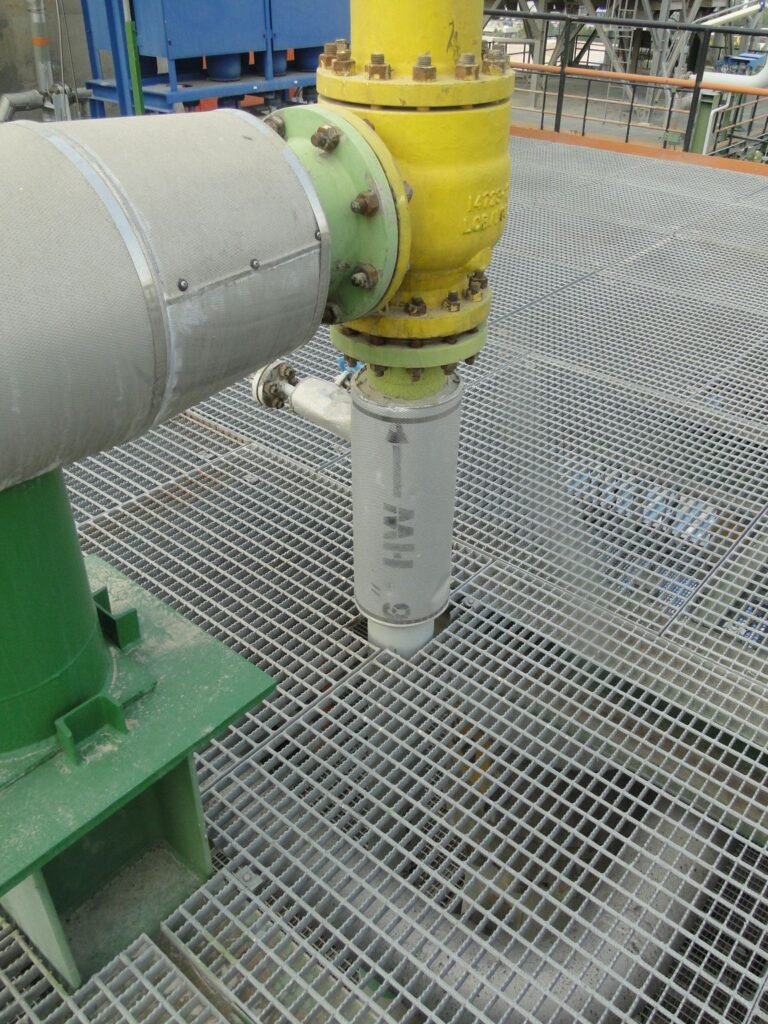
👉That yellow valve is a Pressure Safety valve, your last line of defense if system pressure exceeds safe limits. If its disc were corroded shut right now, no one would know.
✔ RCM II (Moubray, Ch. 5) uses a PSV as its precise example of a non-fail-safe protective device: “If the pressure relief valve was jammed shut, no one would be aware of the fact as long as the pressure in the vessel remained within normal operating limits.”
⚠️→ PSV functioning → overpressure event → valve relieves → system protected
🛑→ PSV jammed shut → overpressure event → valve does not relieve → multiple failure ✗
💡 Difference between these two states on a routine walkthrough: visually identical
This is precisely what makes PSV failures so dangerous — the failure is hidden until the exact moment protection is needed. By then, it is too late.
A PSV has one job: relieve pressure if overpressure occurs.
Moubray is explicit—its function must be described as “to be capable of relieving pressure in the event that system pressure exceeds the design limit.” Capable. Not just present.
🔸 Presence ≠ capability
🔸 Installed ≠ functional
🔸 Last inspected 3 years ago ≠ functional today
💡The only way to know if that PSV will perform when called upon is a scheduled failure-finding task—a proof test at defined intervals, designed to reveal the hidden failure before the overpressure event reveals it for you.
When was the last time your PSVs were proof-tested — not just visually inspected?