
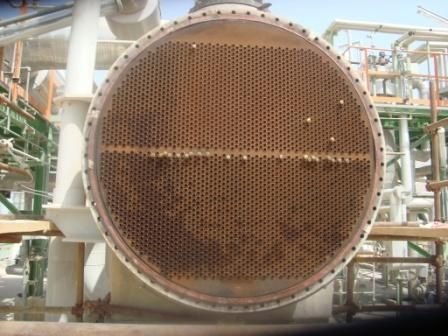
Look at this tube sheet. Those sealed tubes weren’t fouled;
they were plugged. Each one was leaking, so it was taken out of service. The exchanger? Still running. No alarms. No downtime.
Heat exchangers are intentionally overdesigned. Engineers build in a fouling margin, so losing a handful of tubes rarely hurts performance immediately. The unit keeps humming. The problem feels solved.
⚠️Heat exchangers are notorious for hiding their degradation.
Efficiency drops silently until a process upset, a high skin temperature, or a surprise inspection reveals the real story.
💡 According to Chapter 8 of Maintenance and Reliability Best Practices (Gulati, 2009), condition-based monitoring of heat exchangers should track:
→ Differential temperature
→ detects tube fouling and reduced heat transfer
→ Differential pressure
→ reveals tube blockage and flow restriction
→ Ultrasonic testing
→ measures pipe and tube wall thinning from corrosion/erosion
The real questions remain unanswered:
✔️ Why are tubes leaking? Corrosion? Erosion? Flow-induced vibration fatigue?
✔️ Is the same mechanism attacking other tubes right now?
✔️How many plugs before the overdesign margin runs out?
🔑The exchanger gives you time. Root cause analysis is how you use it wisely before the next shutdown forces the conversation.
Have you ever walked into a facility and found a heat exchanger with 20+ plugged tubes and no RCA on record?